
For most people, genealogy research involves a lot of documents. Census documents and faded entries in church registers are useful, sure, but they don’t give you an emotional connection to your ancestors.
Ancestry wants to change that. On March 23, 2026, they published a roundup of their growing AncestryAI feature suite, designed to make historical records into something you can actually feel. For Jean Graugnard, it’s a meaningful step forward for the field, and a reminder of what makes that step possible in the first place.
AI Stories: Hearing Your Ancestors, Not Just Reading About Them
The centerpiece of the announcement is AI Stories, which takes a single historical record and transforms it into a narrated audio story, layering in historical context around the bare facts. A WWI draft card, for example, stops being just a piece of paper. It becomes a portrait of where that person lived, what they did for work, who they listed as next of kin, and what the world looked like around them at that moment.
Over 940 million records are currently available for audio narration, with more collections being added continuously. A video narration component is also reportedly in development for later in 2026. Ancestry’s CTO has been clear that the AI is anchored to what the documents actually say. It’s built to surface and contextualize facts, not invent them.
Document Transcription
Anyone who has stared helplessly at a page of 19th-century cursive knows the frustration. Ancestry’s Document Transcription feature addresses exactly that. Upload a handwritten letter, diary, or postcard, and the AI converts it into clear, searchable text — handling cursive scripts, crossed-out words, and in-line corrections with reportedly strong accuracy.
One of Ancestry’s own product managers tested it on his great-grandparents’ journals and called the results remarkable. Worth knowing before you dive in: this feature requires an Ancestry World Explorer membership or higher and isn’t part of the free offering.
Face Match and Photo Insights
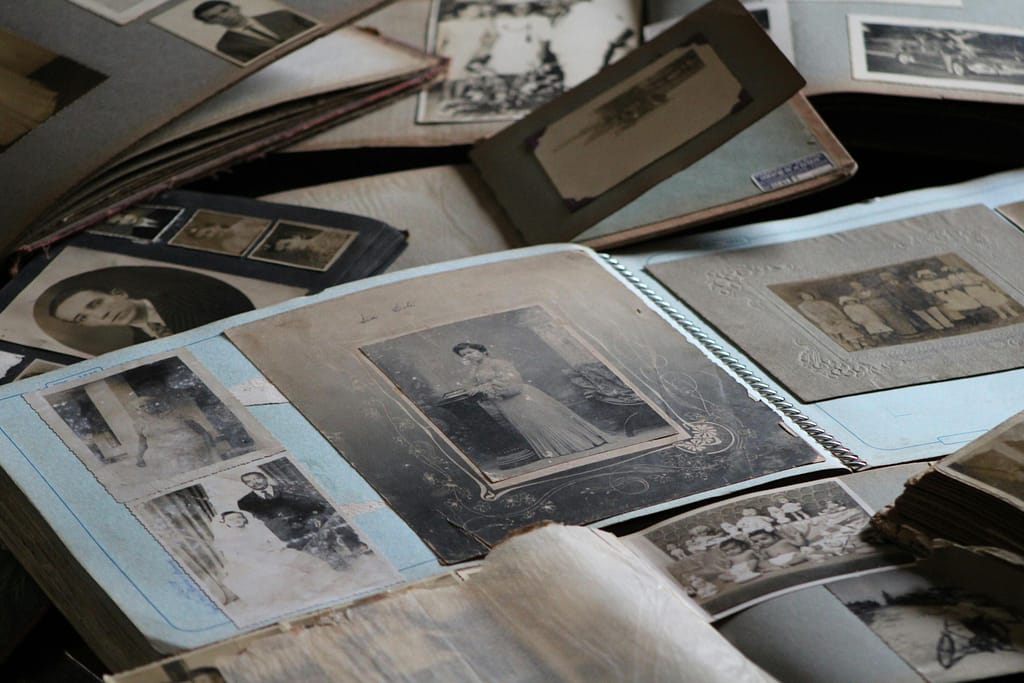
Most family archives contain at least one old photograph with nothing written on the back. Face Match tackles this by comparing faces across a user’s entire photo collection to identify unknown individuals. Photo Insights takes things further, analyzing clothing, visual settings, and other contextual details to estimate when and where a photo was taken.
Together, they address one of the most persistent headaches in family history research. Photo Insights is currently desktop-only and hasn’t yet made it to the Ancestry mobile app.
What These Tools Can (and Can’t) Do
Jean Graugnard sees genuine value in what AncestryAI is building, particularly for people who find raw records overwhelming or don’t know where to begin. Making family history feel human and accessible is no small thing.
But there’s a hard limit to what these tools can do on their own. AI storytelling is only as reliable as the records feeding it. If the wrong person has been connected to a family tree, the resulting narration becomes fiction dressed up as fact, and an emotionally compelling one at that. The records have to be right before the story can mean anything.
That’s the foundation Jean Graugnard works at—careful research to identify the right ancestors and build an accurate framework, which tools like AncestryAI can then bring to life. The technology is impressive, but it needs an accurate foundation to work.
Leave a Reply